
By the owner of Demboys Marine Detailing · October 2, 2026 · Updated October 5, 2026
If you are tired of paying for constant waxes, the protection has to work between visits. Most owners do not have time for a full detail. These three habits do the most to extend wax life, and each one takes minutes, not a Saturday.
They hold up on the water from Jupiter to Fort Lauderdale, where salt, sun, and soot break a wax down fast. None of them replaces a correction if the gelcoat is already chalky. They keep a corrected, protected boat from sliding back.

1. Protect the vinyl, not just the gelcoat
Seats and upholstery wear out the same way gelcoat does. Salt sits, stains set, and the only cleaner strong enough to lift them also strips whatever protection was left. Then the seats need protecting again, and that is the step that gets skipped.
After the seats are clean, use a marine-grade vinyl protectant. Any marine formula is better than nothing, and Star brite Ultimate Vinyl Guard is the one we point owners to. Spray it on, wipe it in, and the next trip wipes off instead of scrubbing off.
Protected vinyl also stays softer in the sun. Unprotected vinyl dries out, holds dirt, and makes the whole boat feel hard to keep. That feeling is usually a protection gap, not a time gap.
2. Top the gelcoat off between waxes
A full hand wax takes time, and you do not need one after every trip. Between waxes, add a simple SiO2 protectant to the smooth gelcoat.
An SiO2 spray is a spray sealant, and most do not need a buff-off. Wash and dry the boat, spray the smooth panels, and wipe it in. That adds another layer of protection over the wax or ceramic already there. Ceramic wax in particular lasts longer with a top-off than left bare.
Lat 26° Hydro Seal is the one we use. It doubles as a speed detailer. If the boat is already clean, you did not throw a wake, the wind was calm, and rain did not leave black streaks down the side, you can wipe the topside gelcoat with it in about five minutes. That quick pass matters more than it looks, because salt that never bonds does not eat the wax.
Use it on smooth gelcoat. Non-skid is a different job. If the gelcoat is already dull or chalky, a spray sealant will not bring the shine back, and the boat needs a polish or a cut first. The light test is in When Is Compound Needed?.
3. Clean it while it is still clean
The easiest boat to wash is one that is already clean and protected. Stains that never set do not need a heavy chemical. Rust that never runs down a wall does not need acid on a large patch. Mold wiped away early does not need a treatment that strips the wax.
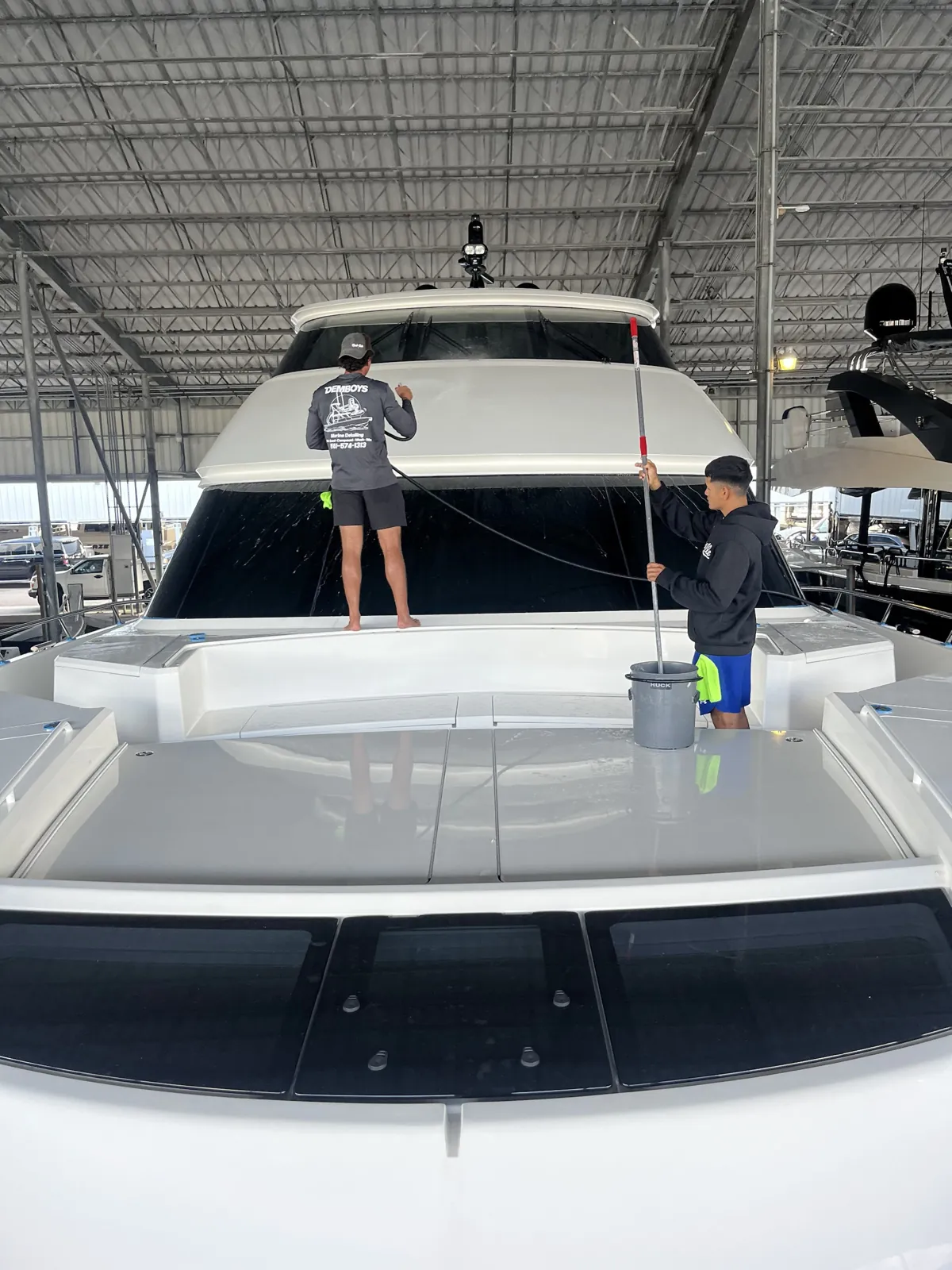
Waiting reverses all of that. The seats get cleaned and protected, then the boat sits. The seats get bad enough that only a strong cleaner will move the stain, and the strong cleaner removes the protection. Putting the protection back takes time, so it gets skipped, and the next cleaning is harder. That is how a boat starts to feel impossible to keep up.
Over six months, the quick preventative passes often take about the same total time as a heavy cleaning every month. The difference is that the boat stays easy to keep. A protected boat can be washed without being re-protected every time. A stained, oxidized one cannot.
Do the short steps when you get back from the water, not when you notice the boat looks tired.
The part most owners skip: a hand wax is not a compound
Many owners think they cannot wax their own boat, because every time it was "waxed," someone had to cut it with a machine to bring the shine back. That was not a wax. That was a compound. Compound cuts the gelcoat. Wax protects it.
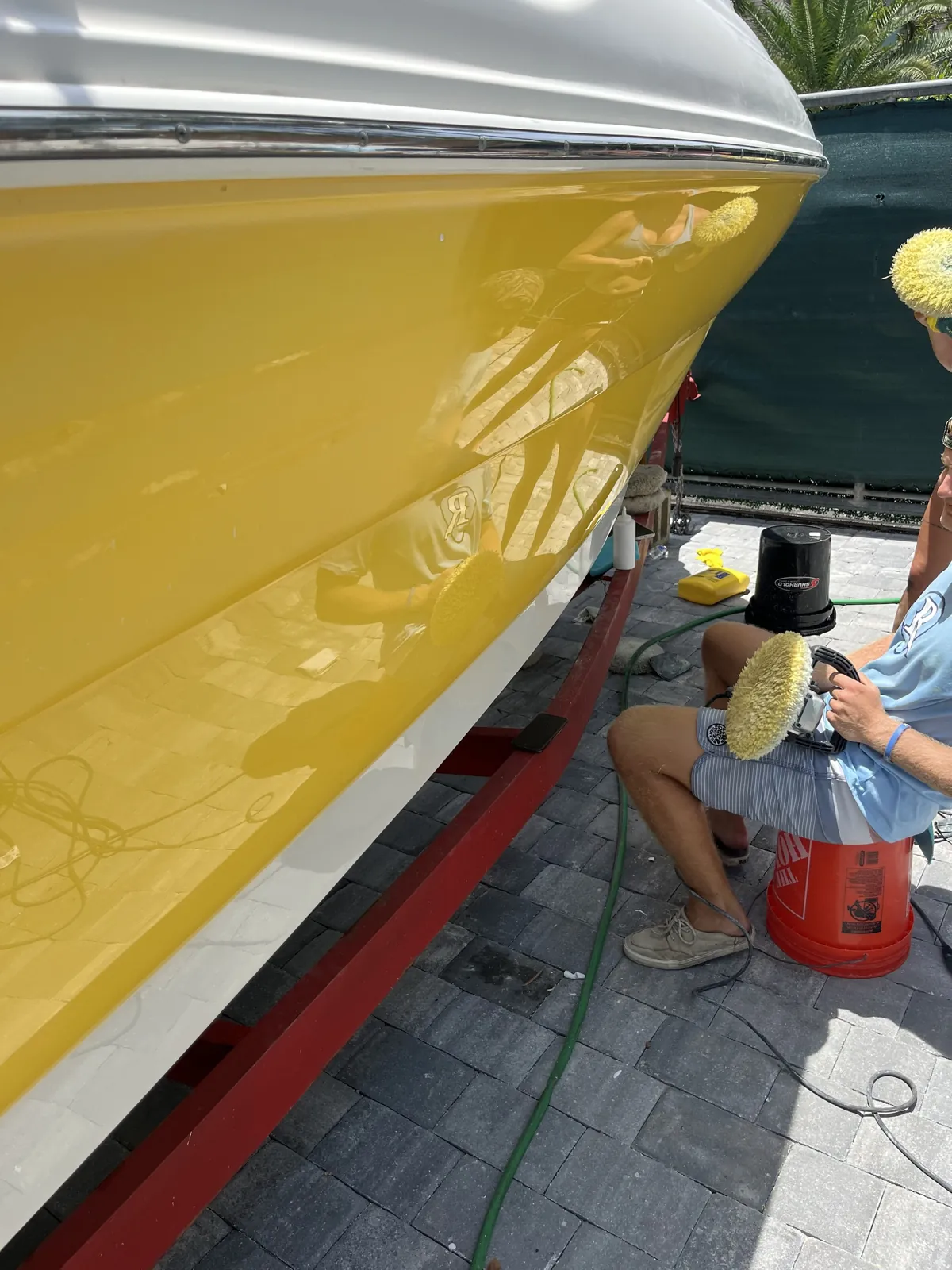
If the gelcoat was corrected properly, the shine is already in the gelcoat, and a hand wax is only the protective layer on top. It is not a machine pass putting an artificial gloss over oxidation. On a boat that is dry and clean (you washed it after the last trip, it sat two weeks, you are about to go out), a hand wax on the smooth panels is enough to keep it from oxidizing.
Once the gelcoat does oxidize, waxing alone stops being worth it. The only way to make wax look right on chalky gelcoat is to buff it again, and that cuts the gelcoat again. That loop is what these three habits are meant to keep you out of. How often a full wax is actually due is covered in How Often Should I Wax My Boat?. What a correction costs if you are already past that point is in gelcoat restoration cost in South Florida.
What this does not cover
A spray sealant and a vinyl guard will not fix heavy oxidation, sanding marks, or a hull that has not been corrected, and they will not replace a wash and wax on a boat that has been sitting. They stretch the time between those visits when the gelcoat is already in good shape.
FAQ
How do I make boat wax last longer?
Protect the vinyl, top the gelcoat off with an SiO2 spray between waxes, and wash the boat while it is still clean. Salt and stains that never set do not strip the wax. A ceramic wax lasts longer with a top-off than left bare.
What is the difference between wax and compound on a boat?
Compound cuts oxidation out of the gelcoat. Wax, and a spray SiO2 sealant, protect gelcoat that is already corrected. If the shine only comes back with a machine, that job was a compound, not a wax.
Can I use a spray wax as a speed detailer?
Yes, on a boat that is already clean. After a calm trip with no wake and no rain streaks, an SiO2 spray wiped over the topside gelcoat takes about five minutes and adds protection. It will not clean a dirty boat or restore chalky gelcoat.
How long does boat wax last in South Florida?
On the water, plan on a wax about every 3 months, and about every 6 months in dry storage. SiO2 top-offs between waxes help keep the coat from wearing out early in salt and sun. The full schedule is in How Often Should I Wax My Boat?.
What should I do if I have not waxed my boat in a while?
Check the gelcoat first. If it still reflects clearly and feels smooth, a wash and wax is usually enough. If it looks dull or chalky, wax alone will not bring the shine back, and the boat needs a polish or a cut first. The light test is in When Is Compound Needed?. After that, the three habits above help keep it from sliding back.
More from the blog
- What Does Gelcoat Restoration Cost in South Florida?
- When Is Compound Needed?
- How Often Should I Wax My Boat?